
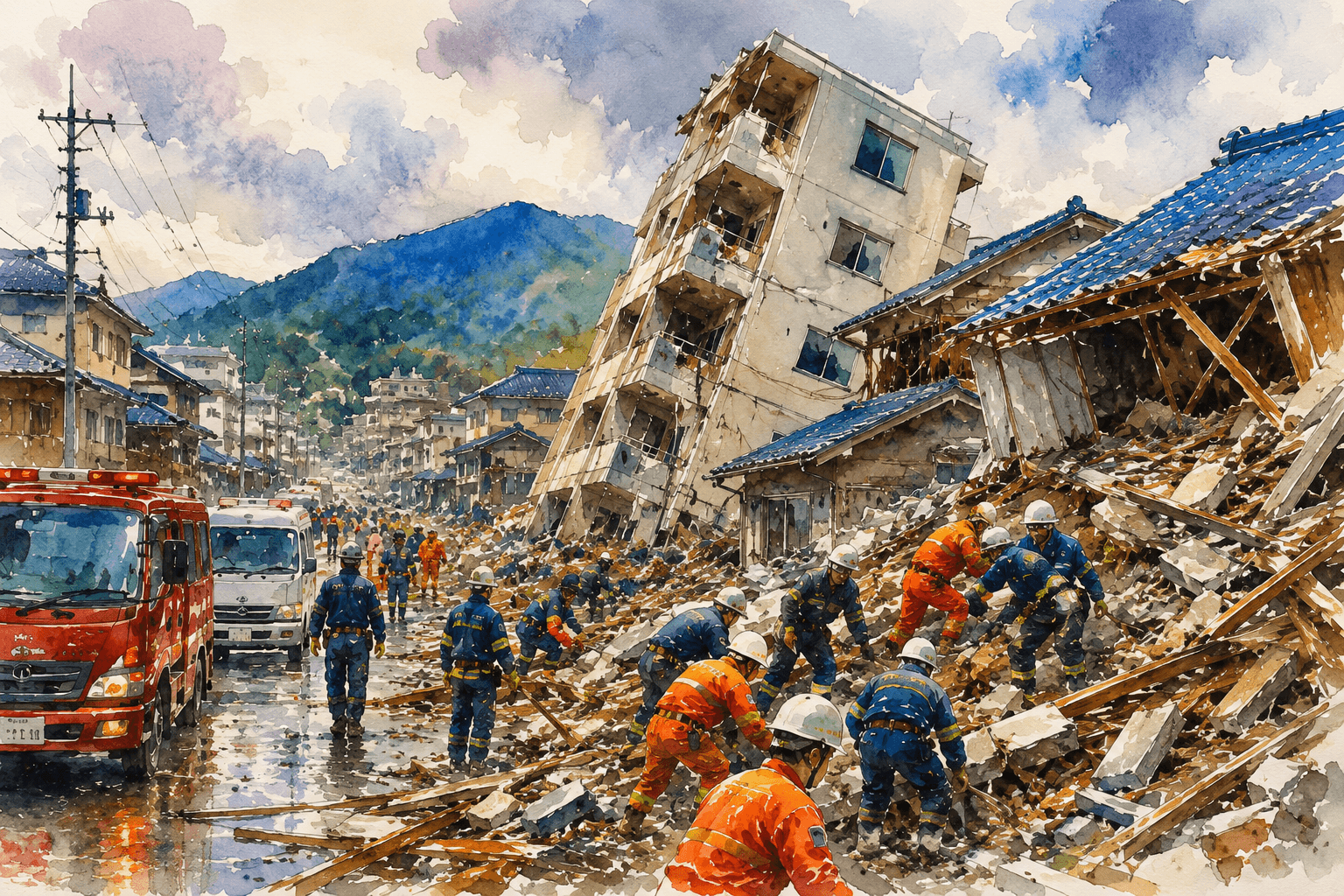

A powerful 7.1-magnitude earthquake struck Japan's southwestern Kyushu region, centered near Kumamoto Prefecture, on July 28, triggering widespread destruction and prompting a massive emergency response. The earthquake caused buildings to collapse, damaged roads and bridges, disrupted transportation, and forced hundreds of thousands of residents to evacuate.
According to the latest official updates, at least 13 people have lost their lives, while hundreds have been injured. Rescue teams continue searching for survivors trapped beneath collapsed structures, including a heavily damaged shopping mall where an explosion followed the earthquake. Authorities have warned that the critical first 72 hours remain crucial for finding survivors.
The earthquake temporarily triggered a tsunami advisory for parts of southern Japan, although the warning was later lifted after no major tsunami developed. Officials continue to caution residents about the risk of strong aftershocks and have urged people to remain in safe locations.
More than 260,000 residents were advised to evacuate as emergency shelters opened across the affected region. Thousands of military personnel, firefighters, and emergency responders have been deployed to assist rescue efforts, restore essential services, and provide humanitarian aid.
The disaster also disrupted transportation and industry. Bullet train services were suspended, flights experienced delays, and several manufacturing facilities—including semiconductor and automotive plants—temporarily halted operations for safety inspections. Japanese nuclear regulators confirmed that no abnormalities were detected at nearby nuclear power plants.
Japan, located along the Pacific "Ring of Fire," experiences frequent seismic activity due to the movement of multiple tectonic plates. Authorities continue to monitor aftershocks while urging residents to stay alert and follow official safety instructions.